
Why Every Amigurumi Pattern Goes 6, 12, 18, 24: Increases and Decreases Explained
How amigurumi shaping works: the magic ring, why rounds grow by six, spacing increases and decreases evenly, and how to size any ball or tube yourself.
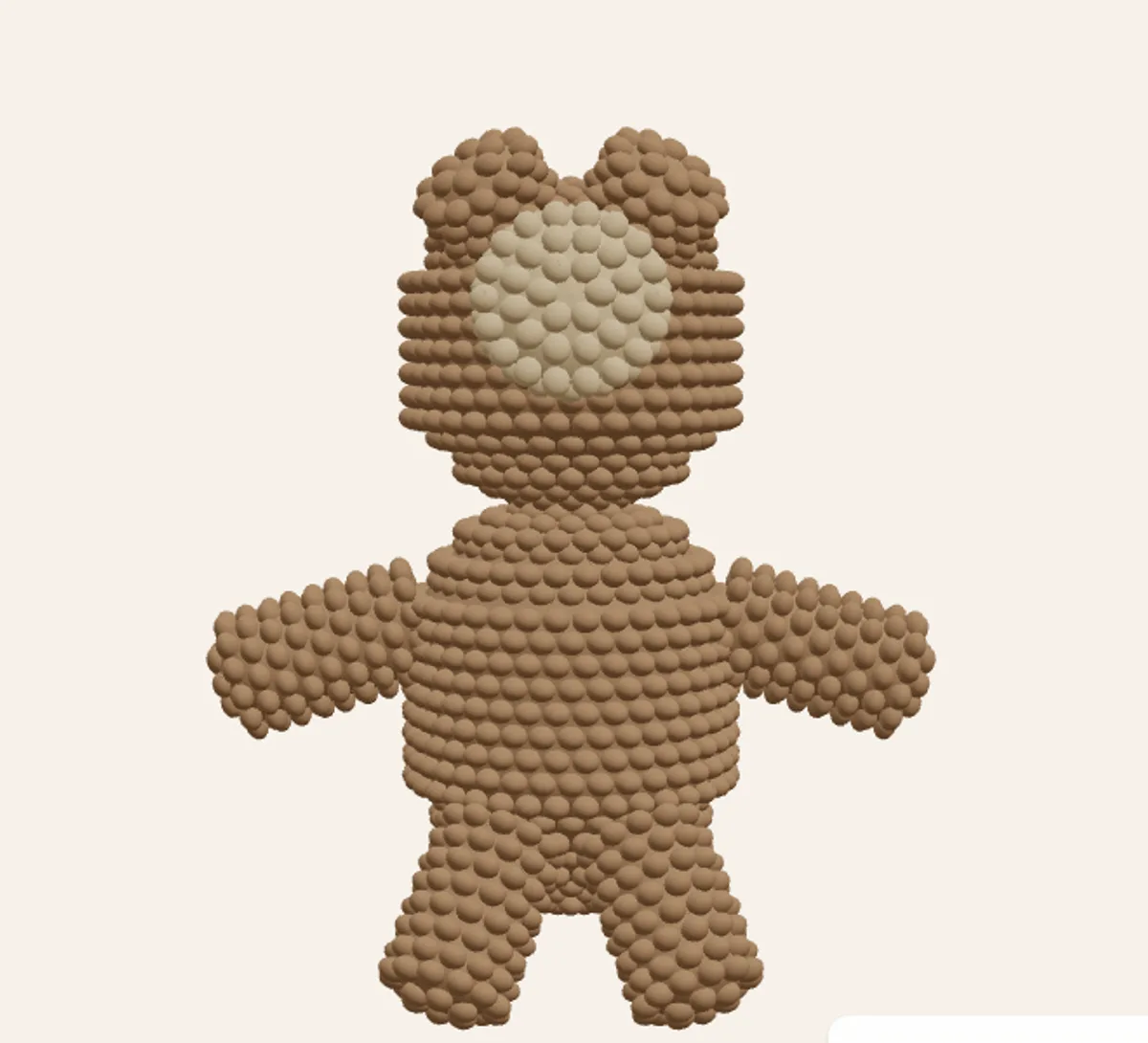
If you have followed a few amigurumi patterns, you will have noticed they all start the same way: 6 in a magic ring, then 12, 18, 24. Later they go back down through the same numbers. That is not a convention someone invented; it is geometry. Once you see it, you can shape anything.
One stitch has a size
A single crochet in medium (DK) yarn on a 3.5 mm hook is about 6 mm wide and 5 mm tall. Those two numbers are the whole secret. Every round of a shape has a circumference, and the number of stitches in that round is simply the circumference divided by the width of one stitch. Every round is also one stitch tall, so a piece that is 5 cm long has about ten rounds.
Thin yarn makes smaller stitches, so the same shape needs more of them. Thick yarn needs fewer. That is all “gauge” means for amigurumi, and it is why a pattern written for DK comes out bigger in worsted.
The magic ring is a tiny disc
Six single crochet in a magic ring, pulled tight, make a disc about a centimetre across. Now add six stitches in the next round: the circumference grows by six stitch widths, which is exactly what a flat disc one round wider needs. Add six again, and again, and you have a flat circle. That is the 6, 12, 18, 24 opening, and it is flat by design.
A ball is a disc that stops being flat. Near the top of a sphere the surface is almost flat, so the rounds grow by nearly six each. Closer to the middle the surface curves away, the circumference grows more slowly, and the pattern slips in plain rounds: “(3 sc, inc) x6, then sc in each st”. At the equator the round stops growing. Then the whole thing runs backwards with decreases.
Why the increases are spread out
An increase makes a stitch wider. Six increases stacked in the same place make a corner, which is how you crochet a hexagon on purpose. Spread evenly around the round, they make a circle. That is why patterns say “(2 sc, inc) x6” and why good designers stagger the increases from round to round so the seams do not line up into visible ridges.
The same goes for decreases. “(2 sc, dec) x6” takes the round from 24 to 18 evenly, and the shape stays round.
Reading the numbers in brackets
The count after each round is the number of stitches in that round when you finish it. Increases add one each, decreases remove one each. If you are on “(sc, inc) x6 (18)” and you count 17, you missed an increase; do not pull it out, just add one on the next stitch. Nobody can see it.
Sizing your own shapes
You can write a ball or a tube yourself with the two numbers from the top:
- Decide the width of the widest round, in centimetres.
- Circumference is width times 3.14. Divide by 0.6 (the stitch width in medium yarn) to get the stitches at the widest round. Round to the nearest multiple of six.
- Increase by six each round from the magic ring until you reach that number, with a plain round now and then if the shape should be rounder.
- Work plain rounds for the length of the straight part, one round per 5 mm.
- Decrease by six per round to get back to 6, stuff, and close.
A 7 cm ball: circumference 22 cm, 36 stitches at the widest. Eight rounds up (6, 12, 18, 24, 24, 30, 30, 36), a handful of plain rounds, eight rounds down. An arm 1.8 cm thick: 5.7 cm around, 9 stitches, which becomes 12 (the nearest six), so an arm is 6 in a ring, then 12 for as many rounds as it is long.
Or let the computer do it
This is exactly what the Knytstudio amigurumi designer does for every part of an animal you build in 3D. You set sizes in centimetres, pick a yarn thickness, and it walks each shape round by round, works out the counts, snaps them to multiples of six the way you would by hand, and writes the pattern with the counts in brackets and the assembly notes. Our free bear pattern was written that way, and you can open it in the designer and change any part of it.
Whether you write your patterns or generate them, you now know why the numbers look the way they do. That makes it much easier to fix a pattern that is not working, resize one that is, or invent the animal you actually wanted.
Frequently asked questions
Why do amigurumi patterns start with 6 stitches?
Six single crochet in a magic ring make a tiny flat disc that closes fully when the ring is pulled tight. Adding six stitches every round keeps that disc flat, which is why the classic opening is 6, 12, 18, 24. Some designers start with 5 or 8; the same logic applies with those numbers.
How do I know when to stop increasing?
When the round is as big around as the widest part of your shape. Stitches around equals the circumference divided by the width of one stitch. For medium yarn a single crochet is about 6 mm wide, so a 7 cm ball needs about 36 stitches at its widest, and that is where you stop.
What is an invisible decrease?
Instead of pulling up a loop in two full stitches, insert the hook under the front loop only of the next two stitches, yarn over and pull through both, then finish as a single crochet. It leaves no bump on the outside, which matters on a closed, stuffed shape.